ExtraBuzz: Resume
Copyright Protection for Fashion Design Comes One Step Closer to Becoming Law
 Today the Senate Judiciary Committee passed a bill that would give copyright protection to clothing designs. The Council of Fashion Designers of America, intent on fighting the knockoff industry with such legislation, has been pushing for a bill like this for a long time. The Design Piracy Protection Act failed to go anywhere in Congress a couple of years ago, facing opposition from the American Apparel and Footwear Association. But Senator Charles Schumer recently introduce a revised version of that bill, supported by the CFDA and the AAFA, called the Innovative Design Protection and Piracy Prevention Act, which is what the Senate Judiciary Committee unanimously passed today.
 “I think people are a lot more in agreement than they think,” he said. “This bill really draws the line between inspiration and copying. We all understand the importance of inspiration in design. Most inspiration comes from the public domain. The bill seeks to protect that original artwork, it’s not about the utilitarian and the useful. This is specifically targeted at the most artistic fashion you can think of.”It's unclear if the Senate will vote on the bill before the December recess. But if passed, the bill could have a very sad effect on the knockoff industry in this country — and the people who can't afford to buy the designer clothes they copy.
Models for Shopping Websites Must Be ‘Relatable,’ Able to Change Outfits 80 Times in a Day
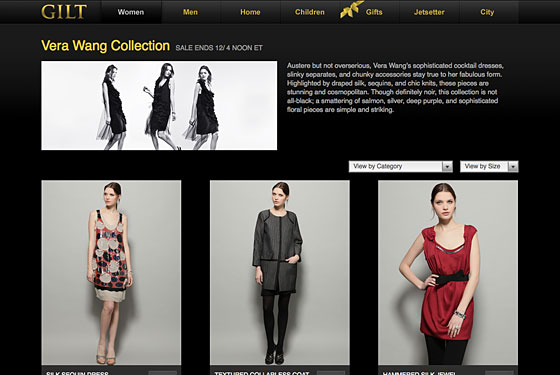
So what makes a model look relatable on the Internet? For starters, she must appear natural and warm; what's more, she can't be overwhelmingly gorgeous, should her beauty make customers feel like slobs:
Web models need to be attractive, of course, but not intimidatingly so — the better, the thinking goes, to woo shoppers who may be browsing at 3 a.m. in their slippers. Many niche apparel sites direct their models to evoke just-off-the-street charm with a touch of je ne sais quoi ... not a bore (as opposed to the unrelentingly cheery models on the Web site of a department store like Macy’s).She also shouldn't be runway-model thin:
The professional online model is skinny, sure — but size 4s, not zeros like many on the runway. “Seeing clothes on someone like them really resonates with consumers — not a runway model, not an austere glamazon,” said Hillary Mendelsohn, an online marketing expert and founder of thepurplebook.com...“The ones that attract us the most are ones with effortless cool who are actually approachable, that you could be friends with.”From a modeling-industry standpoint, it's nice to know that there's a market for slightly more normal-looking girls. However, drawbacks include changing in and out of 50 or more outfits during a single shoot, which means that a model's ability to whip her clothes on and off is an added job requirement:
"Oh, you can definitely do 80 outfits in a day,” said Lindsi Miller, 21, who models once or twice a week for Swirl by DailyCandy, their sample sale site. With a hint of pride, she added, “They tell me I’m the fastest changer they’ve ever had."Interestingly, there seems to be no hard evidence that models sell clothes online much better than plastic mannequins, although Bluefly is the only website that's done any sort of trial, during which they found that "using human beings only slightly increased sales." But it's far more interesting to talk about models than mannequins, so here we are.
Courtesy: NYMag